
In our guide on How to Choose an Italy Tour That’s Right for You, we explore four decisions that help you find the right fit: format, budget, itinerary, and operator. Here, we take a closer look at Italy tour cost—what goes into a tour price and how to budget for total trip cost.
When two trips visit similar destinations for a similar number of days, why does one cost considerably more than the other? The answer usually lies in the details: how many people travel together, where you stay, how you get around, who looks after you, and what is included.
Understanding those differences helps you look beyond the advertised price, plan for the full cost of your journey, and decide where spending more would make a meaningful difference to your experience.

For initial planning, escorted Italy group tours can range from approximately $200–400 per person, per night to $1,200–1,800 or more for luxury trips. The ranges below, also introduced in our main guide, provide a starting point for comparing options.
| Price level | Approximate USD per person, per night | Typical experience |
|---|---|---|
| Budget | $200–$400 | Basic hotels, shared big bus transport, standard experiences, and optional extras |
| Midrange | $400–$700 | Comfortable accommodation and a mix of included and optional experiences |
| Premium | $700–$1,200 | Smaller group size, central hotel location, and distinctive experiences |
| Luxury | $1,200–$1,800+ | Luxury hotels, particular room categories, fine dining, personal services |
These are illustrative planning ranges, not standard industry categories or current quotes. They assume two people sharing a room, exclude international airfare, and vary by season, route, and inclusions.
The features in the table can overlap. A premium small group tour might offer more personal interaction than a luxury trip with a larger group. A private itinerary can use modest hotels or elaborate suites. Price level and travel format are separate choices. Check each operator’s actual group size, accommodations, and services rather than assuming a price label guarantees them.
Two itineraries might both include Rome, Florence, and Venice, yet deliver quite different trips. One might accommodate 40 travelers, stay outside city centers, and offer several excursions at an additional charge. Another might travel with a dozen guests, use centrally located hotels, and include those experiences.
Neither the destination list nor the headline price tells the whole story. Tour prices reflect a combination of arrangements, service, inclusions, and operating costs. A higher price does not automatically guarantee a better trip, but it should be possible to understand what the difference pays for.
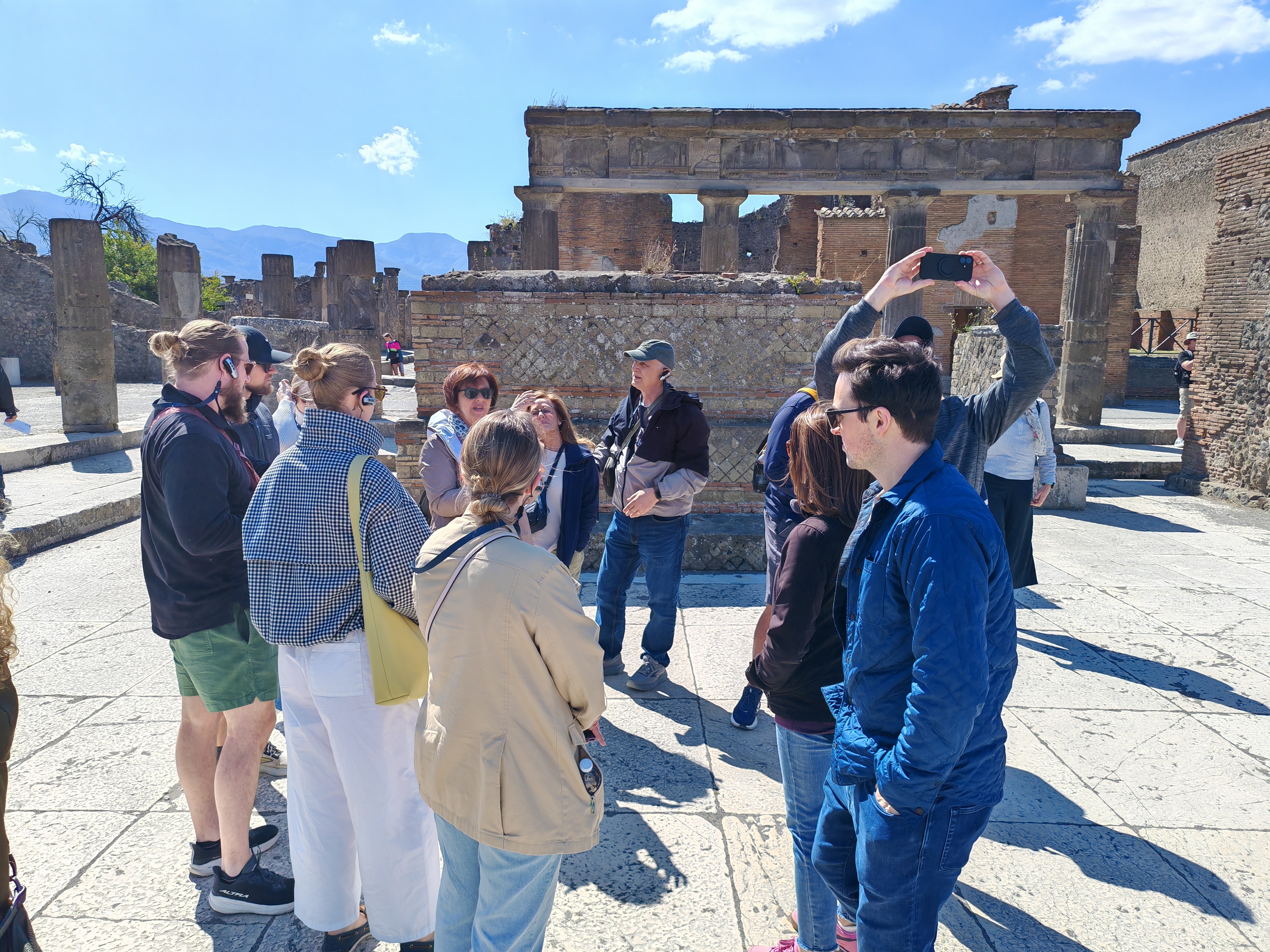
Some costs, such as a tour leader’s time or a private sightseeing guide, are shared among the travelers. Dividing those costs among 10 people rather than 40 can make a meaningful difference to the price per person.
It can also change the experience. A smaller group allows more opportunity for conversation with guides, access to intimate restaurants and workshops, and flexibility during the day. When comparing prices, consider how much personal attention and freedom of movement matter to you.
Hotel costs depend on location, character, facilities, and travel dates. Star ratings alone will not tell you whether you can stroll into a lively piazza after dinner or need transport to reach the center.
A well-located hotel can contribute more than convenience: it makes independent exploring easier and gives you more ways to enjoy your free time.
Check the number of hotel nights, too. An advertised 10-day trip may include fewer nights than you expect, particularly if the operator counts an overnight international flight as the first day. Compare the nights actually provided and the time you have to enjoy each place.
A coach bus, private minivan, public train, and private boat each involve different costs and offer different experiences. Look at how transportation works throughout the itinerary, including transfers between hotels and stations or airports where applicable.
Smaller vehicles can often reach places that large coaches cannot. Private transportation can also provide flexibility that scheduled services do not. Consider the comfort of the journey, the time spent making connections, and how close you can get to the places you are visiting.
A tour with local guides for selected visits provides a different level of service from one with a dedicated Journey Director accompanying the group throughout.
Support also extends beyond sightseeing. Ask whether there is a dedicated US-side team to help with preparation and questions. If you arrive early or stay after the tour, clarify what assistance is available during those additional days and whether arranging services carries extra charges.
These people contribute to the cost of delivering a trip, even when their work happens quietly behind the scenes. Their value often becomes particularly clear when a flight changes, a reservation needs adjusting, or you need help navigating an unfamiliar situation.
Counting included meals is useful, but look at what those meals involve. A limited group menu and a leisurely meal featuring regional specialties may both appear as “dinner included.”
Ask about restaurant choices, drinks, dietary accommodations, and the balance between shared meals and independent dining. Having some meals on your own can be a welcome opportunity to explore; the important thing is to know what to expect and allow for it in your spending.
An itinerary may mention a famous museum without including admission, or describe an excursion that is available for an additional fee.
Look for clarity about entry tickets, reservations, local guides, and whether an activity is private to your group or shared with other visitors. Cooking classes, winery visits, and artisan encounters can also differ considerably in duration, setting, and personal interaction.
The same standard of accommodation and service can cost different amounts in different places or at different times of year. A trip concentrated in popular cities and coastal destinations may have a different cost structure from one exploring less-visited areas.
Compare the actual departure dates as well as the route. Two prices from different travel seasons may tell you little about the relative value of the operators.

Start with the trip you would actually take. Match the departure period, room occupancy, and number of hotel nights as closely as possible, then consider these questions:
| What to compare | What to check |
|---|---|
| Trip length | Hotel nights, arrival and departure arrangements, and usable sightseeing time. |
| Group size | The maximum number of travelers, rather than the description “small group.” |
| Accommodation | Location, room category, and named hotels or representative examples. |
| Transportation | Private or shared services, transfers, and any connections you arrange yourself. |
| Guidance and support | Full-time escort, local guides, US-side assistance, and support during extra days. |
| Meals and activities | What is included and which optional extras you would realistically purchase. |
| Additional charges | Gratuities, local taxes, supplements, and other stated exclusions. |
For example, if you would book the optional city walk, boat excursion, and several transfers on one tour, add those costs before comparing it with a tour that already includes them.
The difference might narrow—or the lower-priced tour might still be the better fit. Either way, you will be making a more informed choice.
Once you have compared the tours themselves, allow for the rest of your journey. Your total spending may include:
Check whether the advertised price is per person based on double occupancy (most of the time they are), and read the inclusions and exclusions for your specific departure.
Begin with the things that make the greatest difference to your enjoyment. If you love wandering out after dinner, hotel location may deserve priority. If you want to ask questions and get to know your guides, group size and personal attention may matter more. If logistics make you anxious, having dependable support may be especially valuable.
There is no single combination that suits everyone. The aim is to preserve the parts of the trip you care about most.
If your dates are flexible, look beyond the busiest travel periods. April and November are worth considering when exploring shoulder-season and quieter-season travel in Italy, depending on the destination.
April offers springtime travel, while November can suit a trip centered on cities, food, art, and local life. Compare actual departures and airfares to see whether changing your dates provides better value.
Our guide to Italy’s travel seasons explores these differences in more detail.
A shorter trip may let you keep the level of comfort and service you want within your overall budget. Spending more time in fewer places can also reduce time spent on additional transfers and switching hotels.
Similarly, you might prefer a comfortable standard room to a luxury hotel, or choose a few special purchases over a long list of optional extras. Make those decisions around what you will enjoy and remember.
At Nada’s Italy, we cap our groups at 12 travelers, so the cost of a Journey Director and private guides is shared among fewer people. In return, guests have more opportunity for conversation, personal attention, and flexibility.
Centrally located boutique hotels, luxury Mercedes minivans, and private boat experiences support comfort and easier access. Small groups also allow us to enjoy local restaurants and family-run businesses that cannot accommodate large tours. Our US-side and local teams provide support before, during, and after the group tour.
These choices place our tours in the premium price range. When travelers consider the experiences, inclusions, and personal service delivered, many tell us they find the overall value well worth it.
Read the in-depth guide on How to Choose a Tour Operator.
The price ranges above can help you narrow your search. Then compare the arrangements, add expenses outside the tour price, and decide which differences matter most to you. A smaller group or central hotel may justify spending more; a different departure date or shorter itinerary may help keep those priorities within reach.
As our guide to How to Choose an Italy Tour That’s Right for You explains, format, budget, itinerary, and operator work together. Good value means choosing a trip whose full cost feels worthwhile for the experiences, comfort, and care you receive.
Italy is a year-round destination, but the experience changes considerably…
Read More

One of the most common questions we hear from travelers…
Read More

Planning your first trip to Italy is exciting — and…
Read More

Even the most carefully planned overseas trip can have…
Read More

