
One of the most common questions we hear from travelers planning their first trip to Italy is: “How much walking should I expect?”
It’s a smart question—and one that doesn’t have a simple answer.
Italy is best experienced on foot. Historic city centers were built centuries before cars existed, charming villages are connected by narrow cobblestone streets, and many of the country’s most famous attractions simply can’t be reached by vehicle.
The good news? You don’t need to be an athlete to enjoy Italy. The key is understanding what kind of walking to expect, planning accordingly, and choosing an itinerary that’s designed with comfort in mind.
This guide provides realistic estimates based on years of experience planning and leading tours throughout Italy. While every traveler and itinerary is different, these numbers should help you set realistic expectations before your trip.

On a typical Italy vacation, expect to walk 4–6 miles (6–10 km), or roughly 3–4 hours of actual walking spread throughout the day.
However, mileage only tells part of the story. You’ll also spend time standing in museums, climbing occasional stairs, walking on uneven cobblestones, and exploring charming streets that naturally encourage you to stop frequently.
Walking is usually spread comfortably throughout the day rather than happening all at once.
| Type of Day | Walking Distance | Walking Time | Total Time on Feet | Typical Experience |
|---|---|---|---|---|
| Easy | 2–4 miles | 1.5–2.5 hrs | 4–6 hrs | Relaxed sightseeing with plenty of breaks |
| Typical | 4–6 miles | 3–4 hrs | 6–8 hrs | A normal full sightseeing day in Italy |
| Busy | 5–7 miles | 4–5 hrs | 7–9 hrs | Several major attractions in one day |
| Very Active | 7–9+ miles | 5–7 hrs | 8–10 hrs | Hill towns or a particularly ambitious itinerary |
Walking five miles in Italy often feels different from walking five miles at home. Here are a few reasons why.
Historic centers throughout Italy feature centuries-old stone streets. They’re beautiful and full of character, but they naturally slow your pace and require a little more attention than smooth sidewalks.
Many famous attractions involve extended periods of standing. Museums like the Vatican Museums or the Uffizi Gallery can easily keep you on your feet for several hours, even though you’re not covering great distances.
Many of Italy’s most picturesque towns—especially throughout Tuscany and the Amalfi Coast—were built on hills for defensive reasons centuries ago. The distances may be short, but elevation changes can make them feel more demanding.
Historic churches, bell towers, bridges, viewpoints, and cliffside villages all include stairs. Fortunately, many attractions also offer alternative routes.
Walking four miles during a pleasant spring morning feels very different than walking the same distance during a hot July afternoon. Hydration and pacing become much more important during warmer months.

The estimates below assume a typical sightseeing visit, not an all-day hiking excursion.
Rome is surprisingly walkable. Many of its most famous landmarks are clustered within the historic center, making it ideal for exploring on foot.
| Attraction / Tour | Est. Walking | Walking Time | Total Visit | What to Expect |
|---|---|---|---|---|
| Historic Center Walking Tour Pantheon, Piazza Navona, Trevi Fountain, Spanish Steps |
2.5–3.5 miles | 2.5–3 hrs | ~3 hrs | Mostly flat, with extensive cobblestones |
| Colosseum & Roman Forum | 2–3 miles | ~2 hrs | 3–4 hrs | Uneven ancient paving, stairs and limited shade |
| Vatican Museums & Sistine Chapel | 2.5–4 miles | 2–3 hrs | 3–5 hrs | Mostly indoors, but substantial walking and standing |
| St. Peter’s Basilica | 0.5–1 mile | 30–60 min | 1–2 hrs | Relatively easy unless you add the dome climb |
💡 Nada’s Italy Tip
The Vatican Museums often surprise visitors—not because they’re difficult, but because they’re enormous. You’ll spend several hours continuously walking and standing inside one of the world’s largest museum complexes.
Florence may be one of Europe’s easiest major cities to explore on foot.
Its historic center is compact, relatively flat, and most attractions are within comfortable walking distance of one another.
| Attraction / Tour | Est. Walking | Walking Time | Total Visit | What to Expect |
|---|---|---|---|---|
| Historic Center Walking Tour Duomo, Piazza della Signoria, Ponte Vecchio, Santa Croce area |
2–3 miles | 2–3 hrs | ~3 hrs | Compact and mostly flat; generally easy walking |
| Uffizi Gallery | ~1 mile | Varies | 2–3 hrs | Not much distance, but considerable standing |
| Accademia Gallery | Under 1 mile | Varies | 1–2 hrs | Compact museum; mostly standing and slow walking |
| Duomo Complex | 1–2 miles | 1–2 hrs | 2–3 hrs | Easy at ground level; significantly harder if climbing the dome or bell tower |
Although Florence is generally easy walking, museums like the Uffizi involve more standing than many travelers expect.
Venice is unlike anywhere else in the world.
Since there are no cars within the historic center, everyone walks. Fortunately, walking here rarely feels strenuous because there’s something interesting around every corner.
| Attraction / Tour | Est. Walking | Walking Time | Total Visit | What to Expect |
|---|---|---|---|---|
| Historic Venice Walking Tour | 2–3 miles | 2.5–3 hrs | ~3 hrs | Flat streets interrupted by frequent bridges and steps |
| St. Mark’s Square & Basilica Area | 1–2 miles | 1–2 hrs | 2–3 hrs | Generally easy; standing time depends on crowds and attractions visited |
| Murano | 1–2 miles | 1–2 hrs | 2–3 hrs | Easy walking mixed with boat travel and stops |
| Burano | 1–2 miles | 1–2 hrs | 2–3 hrs | Flat, compact and easy to explore at a leisurely pace |
Rather than long uninterrupted walks, your day naturally alternates between:
Step counts can be surprisingly high, but the day rarely feels rushed.
The towns themselves aren’t large. The challenge comes from elevation.
| Town | Typical Walking | Difficulty | What to Expect |
|---|---|---|---|
| Siena | 1.5–2 miles | Moderate | Sloping streets, cobblestones and elevation changes around the historic center |
| San Gimignano | 1–1.5 miles | Moderate | Short distances, but noticeable uphill and downhill sections |
| Pienza | 1–1.5 miles | Easy | Compact historic center that’s relatively easy to explore |
| Cortona | 1.5–2 miles | Moderate | Steeper streets make short distances more demanding |

💡 Nada’s Italy Tip
Don’t judge an Italian hill town by its mileage. A leisurely one-mile stroll through Siena or San Gimignano can feel more demanding than three miles on the flat streets of Florence because of the elevation changes and cobblestone streets.
The Amalfi Coast combines some of Italy’s most spectacular scenery with some of its most dramatic terrain.
Fortunately, each town is different.
| Destination | Typical Walking | Difficulty | What to Expect |
|---|---|---|---|
| Positano | 2–4 miles | Moderate–Hard | Steep terrain; stairs can be avoided by following the longer main road |
| Amalfi | 1–2 miles | Easy | Compact and relatively flat around the main historic center |
| Ravello | 1–2 miles | Moderate | Some hills and steps, particularly when visiting the villas and gardens |
| Capri | 2–4 miles | Moderate | Highly dependent on itinerary; buses, taxis and funiculars can reduce walking |
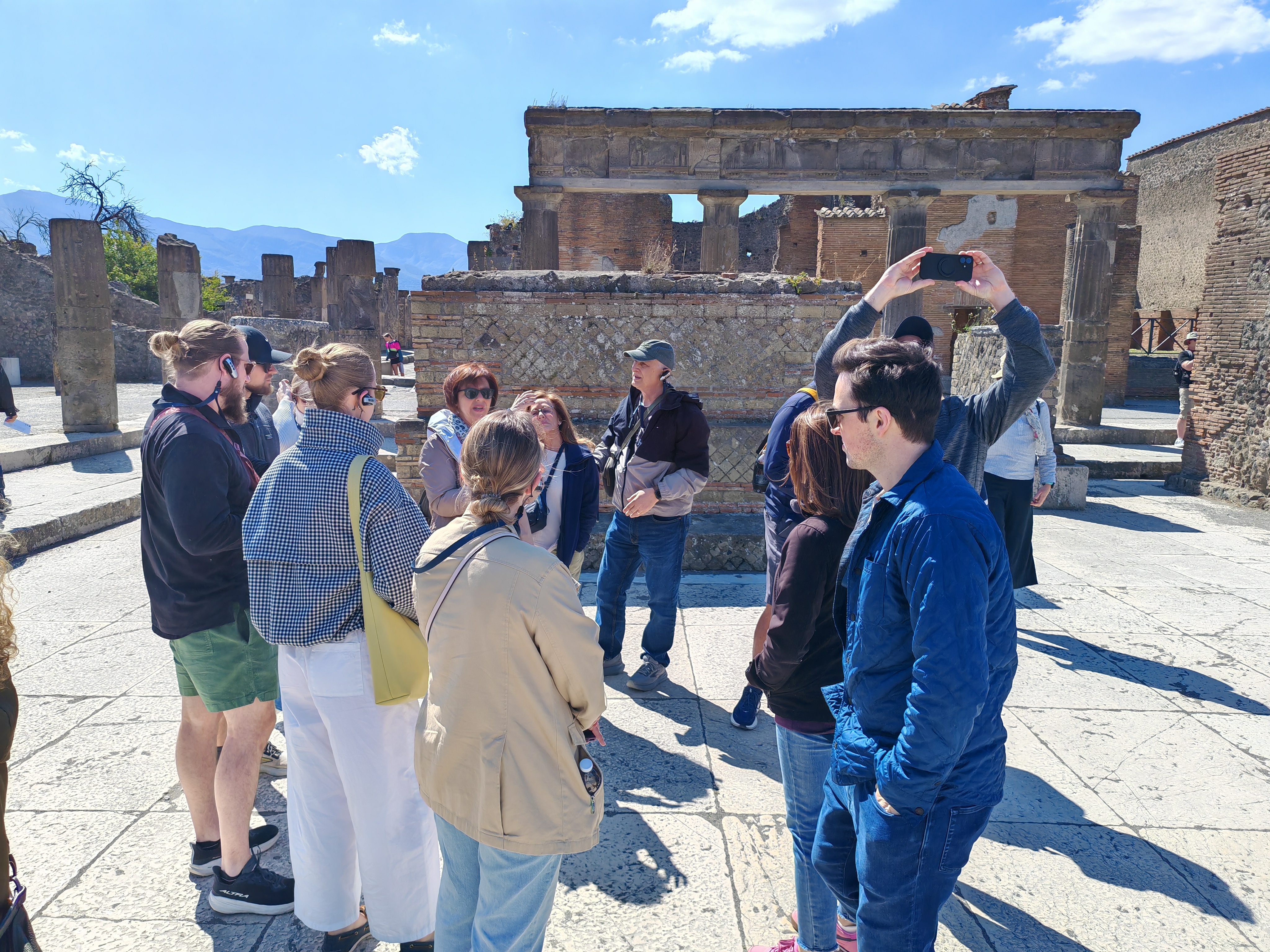
| Pompeii | 2–4 miles | Moderate-Hard | Uneven ancient stone streets, extended standing and relatively little shade |
💡 Nada’s Italy Tip: Two Ways to Reach Positano Beach
Option 1 – Take the stairs: The shortest route follows Positano’s stairways directly down toward the beach and ferry dock. It’s faster and offers wonderful views, but involves a significant number of steps.
Option 2 – Follow the main road: The main road is longer but avoids the major staircases, making it gentler on the knees. As a bonus, you’ll pass many of Positano’s boutiques, artisan shops, cafés, and gelato stops along the way—so the walk becomes part of the experience.
Many visitors automatically assume the famous staircases are the only option. They’re not. Choosing the route that best matches your comfort level can make the experience much more enjoyable.
Pompeii deserves special mention because many travelers underestimate it.
Although the site is relatively flat, you’ll spend several hours walking on ancient stone streets with very little shade. Comfortable shoes and a hat make a significant difference.

Maps are great for estimating distance. They’re much less helpful at estimating effort. Here are a few things many first-time visitors discover only after arriving.
These aren’t reasons to worry—they’re simply good reasons to plan realistically.
One of the biggest differences between a relaxing vacation and an exhausting one isn’t fitness. It’s itinerary design. For example, imagine trying to visit:
…all in one day.
It’s certainly possible. But most travelers would probably finish the day exhausted.
A better itinerary spreads physically demanding attractions across multiple days while allowing time to enjoy leisurely lunches, cafés, shopping, and simply soaking in the atmosphere.
Experienced tour operators consider how much walking each day involves, where breaks naturally fit, how to avoid unnecessary backtracking, and where travelers will stop for lunch or a coffee.
Hotel location also plays an important role. A centrally located hotel may cost more, but it can save miles of unnecessary walking or multiple taxi rides over the course of a trip. Being able to return to your hotel for a short afternoon rest before heading out for dinner can make a long sightseeing day feel much more manageable.
At Nada’s Italy, we intentionally choose boutique hotels in or very close to historic centers whenever possible. Instead of spending extra time commuting each morning and evening, our travelers can simply step outside and begin enjoying the destination.
💡 Nada’s Italy Tip
One of the biggest differences between a relaxing trip and an exhausting one is itinerary design. Experienced planners know how to balance physically demanding sightseeing with leisurely meals, café breaks, free afternoons, and efficient routing to avoid unnecessary walking and backtracking.
Here’s an example from our most popular Italian Treasures Tour in Rome.
| Time | Activity | Walking & Rest |
|---|---|---|
| Morning | Breakfast at the hotel | A relaxed start before sightseeing |
| Morning | Guided exploration of Ancient Rome, including the Roman Forum and Colosseum (with priority entrance) | The most active portion of the day, including uneven ancient surfaces |
| Midday | Group Lunch at a local restaurant | A natural opportunity to sit, rest and recharge |
| Afternoon | Free time in Rome | Explore more, enjoy a café, shop, or return to the hotel and rest |
| Evening | Dinner on your own | Choose something convenient to your hotel or continue exploring |
Notice that although you’ll likely walk around 4–6 miles during the day, it’s naturally broken into manageable sections with plenty of opportunities to rest, enjoy lunch, and explore at your own pace.
| Travel Style | What to Expect |
|---|---|
| Independent Travel | Maximum flexibility, but careful planning is important to avoid unnecessary walking, backtracking and overly ambitious days. |
| Large Bus Tours | Transportation is provided, but large buses often have to park farther from historic centers and attractions. |
| Very Small Group Tours | Smaller vehicles can often get closer to historic centers, while thoughtful routing and pacing can reduce unnecessary walking. |
Good planning doesn’t necessarily reduce the amount of walking—it makes the walking more enjoyable.
At Nada’s Italy, our groups are limited to just 6–12 travelers. This allows us to travel in luxury Mercedes vans rather than big buses. The vans can drop guests significantly closer to historic centers, attractions, and restaurants than large buses, which are frequently restricted to more distant parking areas.
During many city walking tours, our Journey Director also keeps the van nearby whenever possible. If a traveler isn’t feeling well, needs a short break, or simply finds a particular section more challenging than expected, help is usually only a short distance away.
Combined with centrally located hotels and carefully balanced itineraries, these small details make a meaningful difference over the course of a week in Italy. Our goal isn’t to eliminate walking—walking is one of the great joys of Italy—but to make it enjoyable rather than exhausting.
Fortunately, preparing for Italy doesn’t require intense training.
A few simple habits before your trip go a long way.
No. Most travelers who can comfortably walk several miles over the course of a day—with breaks—will do just fine.
Generally yes. Rome involves longer distances, while Florence is much more compact.
Not usually. The bridges are short, and the frequent stops to admire canals, shops, and cafés naturally break up the walking.
Yes. It’s one of the world’s largest museum complexes and involves much more walking and standing than most visitors expect.
Hill towns like Siena and Positano, archaeological sites like Pompeii, and large museum complexes such as the Vatican Museums tend to require the most effort.
Walking isn’t something to fear—it’s one of the greatest joys of traveling in Italy.
Many of the country’s most memorable experiences happen while wandering quiet streets, discovering hidden piazzas, stopping for an espresso, or stumbling upon a neighborhood bakery.
The goal isn’t to avoid walking.
It’s to know what to expect, wear comfortable shoes, pace yourself, and choose an itinerary that lets you enjoy each destination rather than rushing through it.
With realistic expectations and thoughtful planning, most travelers find that walking becomes one of the most rewarding parts of experiencing Italy.
Italy is a year-round destination, but the experience changes considerably…
Read More

Planning your first trip to Italy is exciting — and…
Read More

Even the most carefully planned overseas trip can have…
Read More

One concern many travelers, especially senior travelers, have before going…
Read More

