

Even the most carefully planned overseas trip can have unexpected moments. A flight is delayed. A suitcase doesn’t arrive with you. You wake up one morning not feeling quite right.
If any of that happens, the first thing to know is: it’s normal.
Travel, especially international travel, involves many moving parts—airlines, weather, local transport systems, hotels, and your own body adjusting to a new rhythm. Even on the smoothest itineraries, things can shift without warning.
We’ve been working with travelers for over 20 years, and we’ve seen just about every scenario you can imagine. Flights missed by minutes, bags that take unexpected detours, sudden strikes, jet lag that hits harder than expected, and the occasional sprained ankle on a cobblestone street.
Almost every time, the situation is manageable – because you know what to do next, and because there is usually someone helping you do it.
This guide walks you through what to do in those moments, step by step, so you always know what comes next. We will divide all trip disruptions into two broad categories: 1) Logistical disruptions, and 2) Health issues.
Most travel disruptions begin with transportation. One delay can ripple into everything else—your hotel check-in, your transfer, your next city, your plans for the day.
The important thing in these moments is not to solve everything at once. It’s simply to reconnect the chain, one link at a time.

This is the most common disruption—and also the one that feels the most chaotic at the moment.
If your flight is delayed, the best approach is surprisingly simple: stay where you are, and stay informed.
Airlines will often adjust departure times repeatedly, and moving away from your gate too early can actually make things harder.
If the delay turns into a cancellation, that’s when action is needed:
You’ll usually be rebooked by the airline, but the key step is making sure you are on the best possible rerouting, not just the first available one.
That means:
If you are traveling with Nada’s Italy, you are not managing this in isolation. Our team is able to adjust the rest of your journey in real time—before a delay becomes a domino effect.
That includes:
The goal is simple: when your flight changes, your entire trip does not need to fall apart with it.
In Europe, especially in countries like Italy, transport can occasionally shift due to strikes, weather, or operational delays.
If you’re traveling independently, this can feel like a lot to coordinate in real time. But with structured travel support, someone will be evaluating options alongside you, so you are informed and supported along the way.
You might be offered:
This is one of the most common arrival-day stress points—and also one of the most temporary.
Please do not panic. Usually, your bag is simply on a later flight.
But first, you file a report at the airport before leaving baggage claim, and take a picture of your report. This creates a tracking reference so your luggage can be located and delivered.
After that, the focus shifts to getting through the next 24–48 hours comfortably:
In almost all cases, luggage is returned within a short time window, often directly to your hotel.
This is less common, but understandably stressful.
The key here is preparation and calm escalation.
If you are on a supported itinerary, your local team can also help coordinate next steps so you are not trying to navigate unfamiliar systems alone.
Health issues abroad rarely start as emergencies—but they can feel more overwhelming simply because you are away from familiar routines and support systems. A helpful way to think about this is whether the situation is urgent or non-urgent.
These are the most common travel health situations:
These are uncomfortable, but usually manageable with early care. The best response is often a simple reset:
In many European countries, including Italy, pharmacies are often the first—and best—place to start for minor issues. As we outlined in our healthcare in Italy guide, pharmacists are highly trained and can recommend appropriate over-the-counter treatment without needing a doctor visit.
This is especially helpful for travelers coming from systems where everything requires an appointment.
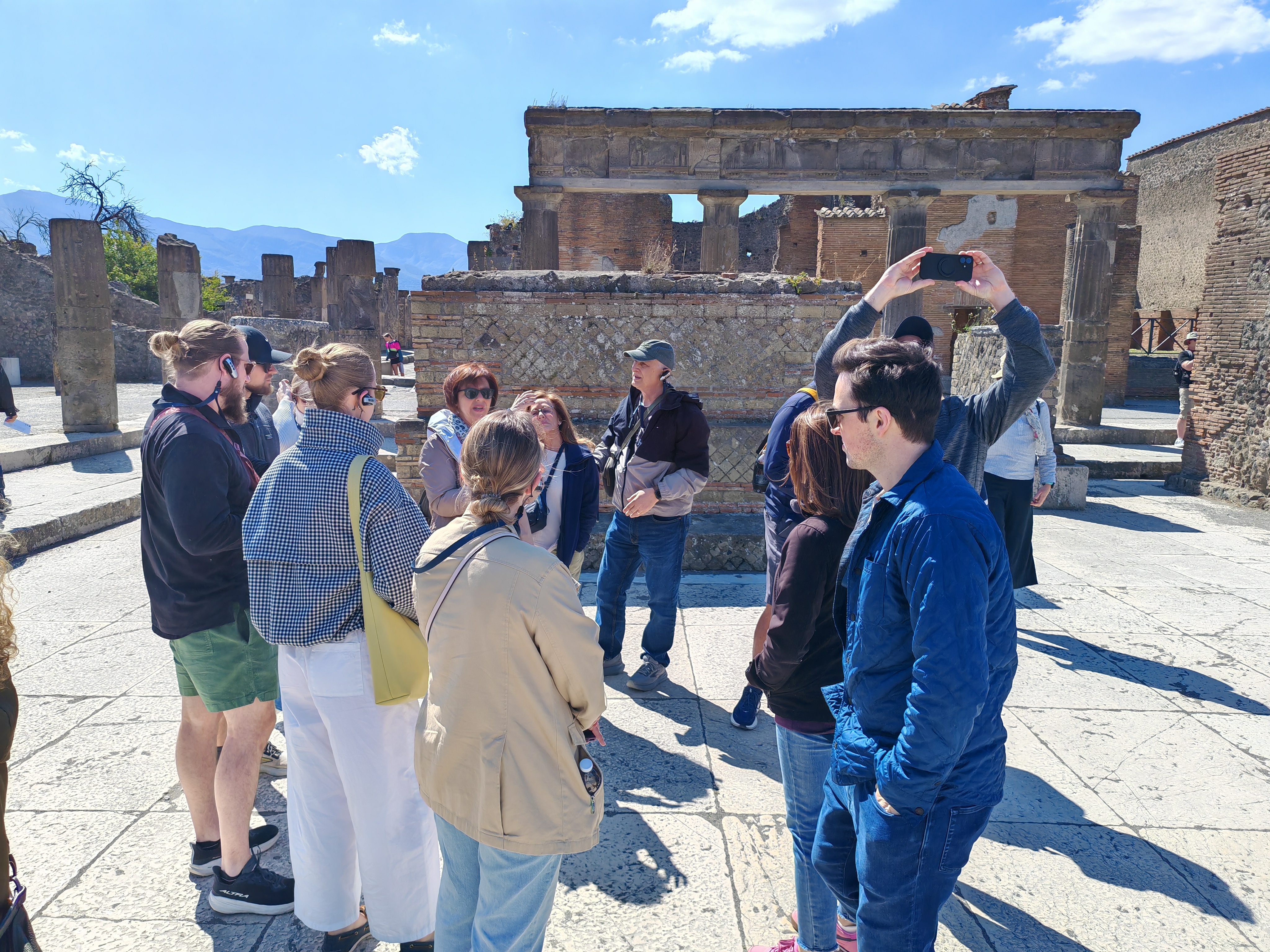
And if you are traveling with a Journey Director on a small group tour, this is also the moment to let them know. With a small group size of just 6–12 travelers, your Journey Director is able to give real, individual attention to each person. Small adjustments—skipping an afternoon activity or slowing the day—often make a big difference in recovery.

These situations are less common, but important to recognize:
In these situations, the priority is simple: get local medical care promptly (do not delay!).
That usually means:
Many travelers are concerned about medical costs overseas, especially without insurance coverage. One pleasant surprise for many American visitors is that medical care in Italy is often considerably less expensive than they expect. (We elaborate more with example costs in this healthcare in Italy guide.)
Once care is underway, the focus shifts to coordination:
If you are traveling with Nada’s Italy, your local team can assist with coordination, logistics, and communication—so you are not navigating unfamiliar systems alone while unwell.
Travel will always involve a degree of unpredictability. It’s part of moving through different systems, countries, and environments that don’t always operate in sync.
When something goes wrong, the situation usually feels bigger in the moment than it turns out to be in reality. Most issues resolve through a few practical steps: making contact, adjusting plans, and allowing the logistics to catch up with the change.
What changes the experience is how quickly you regain clarity about what to do next, and how supported you are while doing it. That’s part of the reason of traveling with a trusted operator with deep local roots, like Nada’s Italy, who can help you navigate these stressful situations.
After 20+ years of working with travelers, one thing is consistent: even when something goes wrong, it rarely defines the trip. The journey will continue, and often with a better story to tell!
Italy is a year-round destination, but the experience changes considerably…
Read More

One of the most common questions we hear from travelers…
Read More

Planning your first trip to Italy is exciting — and…
Read More

One concern many travelers, especially senior travelers, have before going…
Read More

