(updated: Feb 2026)
Italy, a country steeped in history and cultural richness, boasts an impressive array of UNESCO World Heritage Sites that captivate visitors from around the globe. From ancient Roman ruins to Renaissance masterpieces, and from breathtaking natural landscapes to iconic cityscapes, Italy’s UNESCO sites offer a diverse tapestry of human achievement and natural wonders. With 60 inscribed properties as of 2025, Italy holds the distinction of having the most UNESCO World Heritage Sites of any country in the world.
These sites not only showcase Italy’s unparalleled contribution to art, architecture, and culture but also serve as living testaments to the nation’s enduring legacy. In this blog, we’ll embark on a journey through some of Italy’s most remarkable UNESCO Heritage Sites as well as some lesser-known UNESCO sites, exploring their historical significance, artistic value, and the unforgettable experiences they offer to travelers and history enthusiasts alike. We will provide a regional overview of selected UNESCO World Heritage Sites across Northern, Central, and Southern Italy, that illustrate the country’s geographic and cultural range.

*Visit the official website of UNESCO for a full list of sites in Italy and an interactive map.
Northern Italy includes UNESCO sites shaped by alpine geography, medieval trade networks, religious traditions, and long-established agricultural systems.

This site includes the historic city of Venice, its surrounding lagoon, and related islands. Venice’s urban development is inseparable from its water-based infrastructure, including canals, shipyards, and defensive systems that supported its role as a major maritime power.

The Dolomites are recognized for their geological composition, dramatic limestone formations, and fossil record. The site includes mountain groups such as Tre Cime di Lavaredo and Marmolada.

This site represents a historic wine-producing landscape characterized by terraced hills, fortified villages, and agricultural practices tied to regional grape varieties such as Nebbiolo and Barbera.

Verona preserves urban layers from Roman, medieval, and Renaissance periods. The Roman Arena, city walls, and historic center illustrate the city’s strategic and commercial importance.
Central Italy contains a high concentration of UNESCO sites related to ancient Rome, Renaissance urban planning, and early Christian art.

Photo by Leonhard Niederwimmer on Unsplash
This site encompasses ancient Roman monuments, Renaissance and Baroque architecture, and major religious landmarks. Included are the Roman Forum, Colosseum, Pantheon, Vatican Museums, and early Christian basilicas.

Florence’s historic center preserves architecture and urban form associated with the Renaissance, including Brunelleschi’s Dome, Palazzo Vecchio, and major religious and civic buildings.

Urbino developed as a planned Renaissance city under Duke Federico da Montefeltro. The Ducal Palace and surrounding street layout reflect humanist ideals in urban design.

UNESCO designation: 1997
Classification: Cultural
Cinque Terre refers to five historic villages along the Ligurian coast: Monterosso al Mare, Vernazza, Corniglia, Manarola, and Riomaggiore. The site is recognized as a cultural landscape shaped by centuries of human adaptation to a steep and rocky coastline.

This site includes eight monuments known for their 5th- and 6th-century mosaics, representing early Christian and Byzantine art.
Southern Italy’s UNESCO sites reflect ancient civilizations, volcanic activity, and distinctive regional architecture.

The Amalfi Coast is recognized as a cultural landscape shaped by centuries of maritime trade, terraced agriculture, and cliffside settlements such as Amalfi, Ravello, and Positano.

These Roman cities were preserved by the eruption of Mount Vesuvius in 79 AD. The sites provide detailed evidence of urban planning, domestic life, and commerce in the Roman Empire.

Built in the 13th century under Emperor Frederick II, Castel del Monte is known for its octagonal form and precise geometric design.
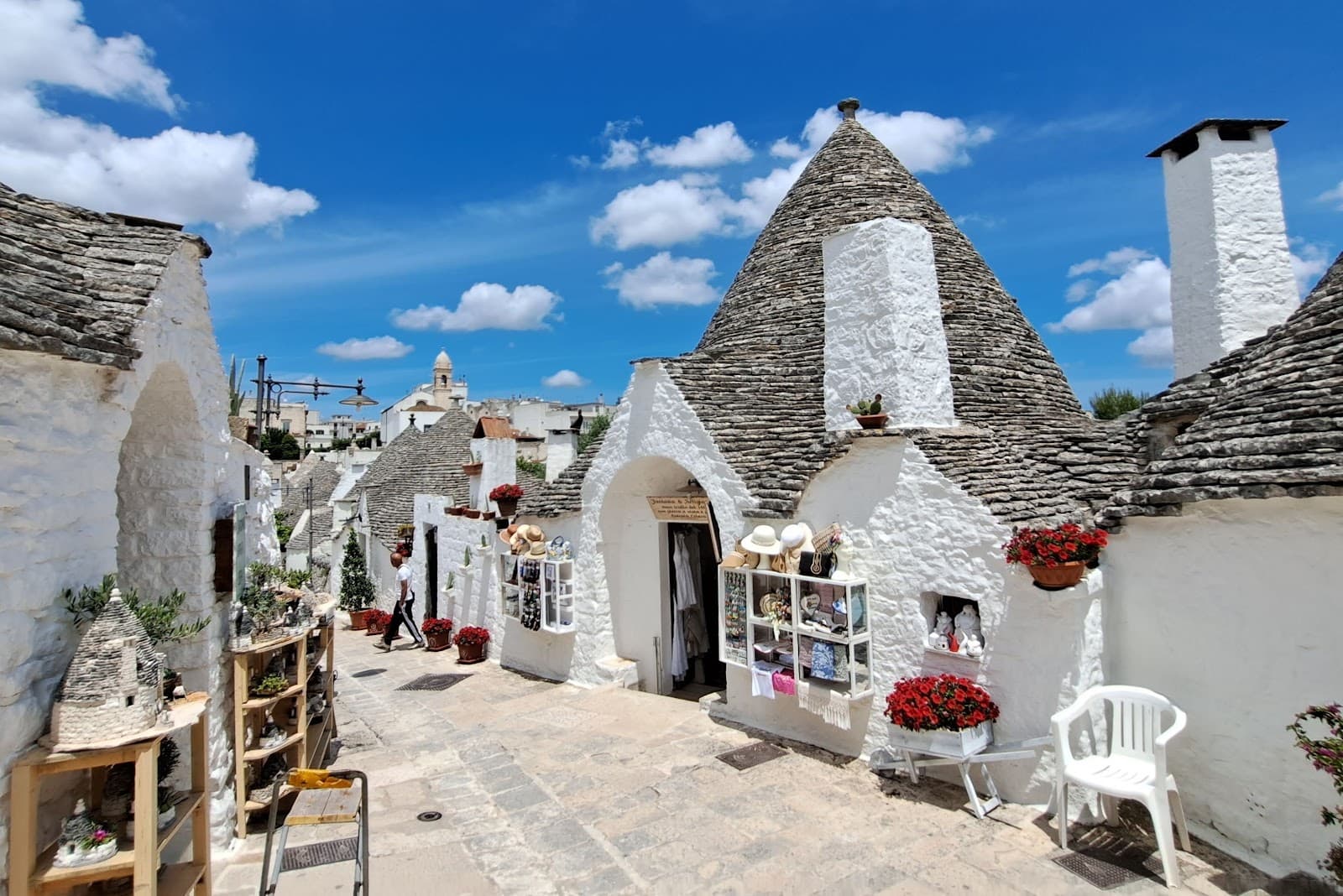
The trulli are traditional dry-stone dwellings with conical roofs, forming a distinct architectural ensemble unique to the region.
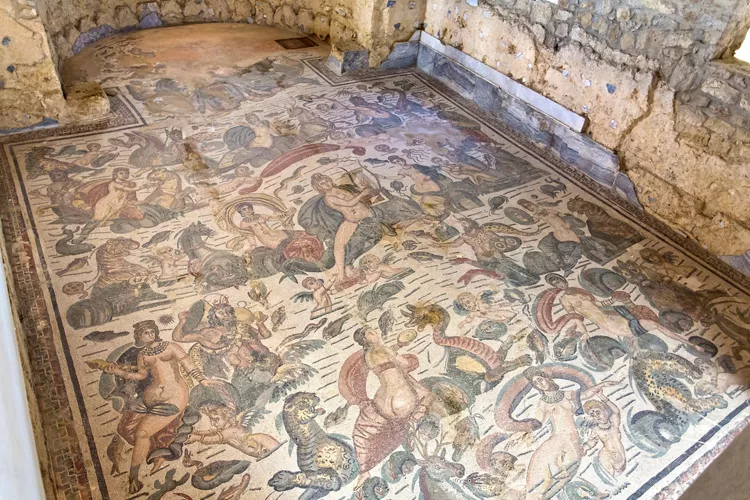
This late Roman villa is notable for its extensive mosaic floors depicting mythological, athletic, and domestic scenes.

Mount Etna is Europe’s most active volcano and is recognized for its geological processes and scientific significance.
Once travelers start paying attention to Italy’s UNESCO World Heritage Sites, a pattern becomes clear: many of them are concentrated within relatively small regions, often representing different centuries and cultural influences in close proximity.
In practice, this means Italy is unlikely to fit into one single “see everything” trip. A single region — whether Northern Italy, Central Italy, or Southern Italy — can contain Roman ruins, medieval towns, agricultural landscapes, and living cities, all within a manageable area. Spending time in just one region a time, but going deeper, allows travelers to notice how history connects to daily life, from architecture and food traditions to local rhythms and customs.
For many people, this is the point where Italy begins to feel less like a list of famous places and more like a collection of distinct regions, each with its own identity. Approaching Italy one region at a time often leads to a more coherent and satisfying experience, especially for travelers who value understanding places more deeply over merely covering ground.
👉 Further reading on this topic:
Travelers who find themselves drawn to this regional approach often look for ways to experience Italy with more context and less rush. For more than 20 years, Nada’s Italy has focused exclusively on small-group travel, limiting groups to fewer than 12 travelers and designing journeys that stay rooted in regional history and culture.
Rather than moving quickly from site to site, the emphasis is on balance — allowing time to absorb major landmarks while also noticing the smaller details that give meaning to them. This approach has earned Nada’s Italy consistently five-star reviews and reflects a shared belief with many travelers: that Italy is most rewarding when it is experienced thoughtfully, with attention to place, pace, and perspective.
Italy in 2027 isn’t just about where you go. It’s about…
Read More
Italy is often described as a country people must “check…
Read More
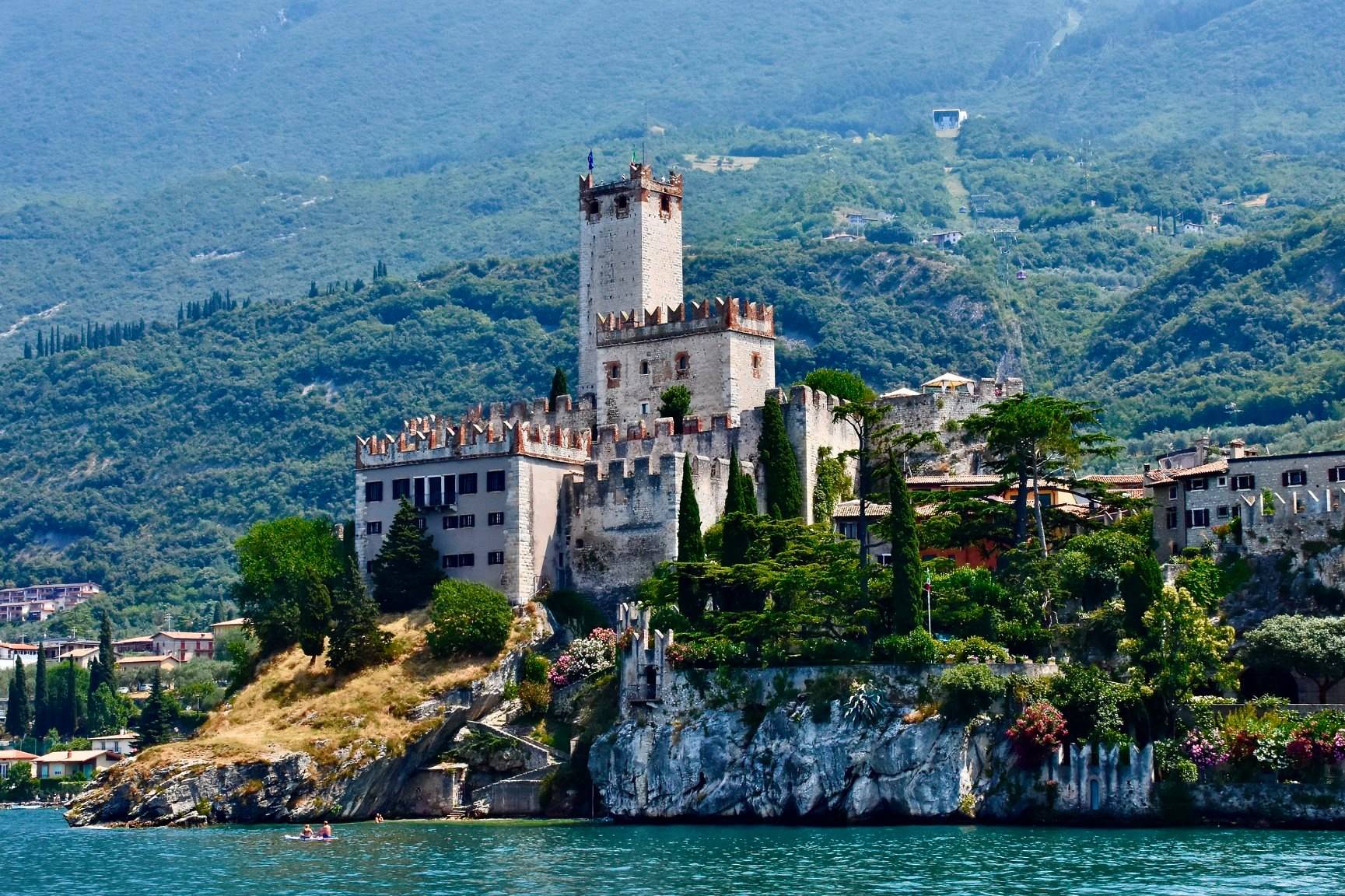
Lake Garda—the largest lake in Italy—is a destination of remarkable…
Read More

Beyond the well-trodden paths of Rome, Venice, and Florence lies…
Read More