
If you’ve ever watched Italy compete on the world stage—whether in football, volleyball, swimming, or athletics—you may have wondered one thing: why does Italy wear blue? After all, blue doesn’t appear anywhere on the Italian flag.
The answer reveals far more than a color choice. It opens a window into Italy’s history, national identity, and emotional relationship with sport. Team Azzurra is not just a nickname—it’s a symbol of unity, pride, and collective memory that transcends individual sports and generations.

“Azzurra” comes from azzurro, the Italian word for light blue or azure. Over time, Team Azzurra has become shorthand for all of Italy’s national teams, regardless of sport. When Italians say “gli Azzurri” or “le Azzurre,” they’re referring to athletes representing Italy at the highest level.
The color is instantly recognizable. Blue jerseys signal that Italy is playing—not just any match, but a match that matters.
Italy’s blue jerseys date back to the early 20th century, before the Italian Republic existed.
The color comes from the House of Savoy, the royal family that led the unification of Italy in the 19th century. Savoy blue was the dynasty’s official color, associated with authority, unity, and the emerging Italian state.
When Italy’s national football team first adopted blue jerseys in 1911, it was a symbolic choice—representing the nation itself rather than a political flag. Even after Italy became a republic in 1946 and the monarchy was abolished, the color endured.
Blue had already become emotionally tied to national sport. It belonged to the people now.
In a country defined by strong regional identities, sport—especially international sport—plays a unique unifying role.
Italy is famously regional. Dialects, traditions, cuisine, and even attitudes can change dramatically from one town to the next. Club sports often reflect these local loyalties. But Team Azzurra transcends regional divides.
When Italy competes internationally:
Wearing blue means representing Italy as a whole—not Rome or Milan or Naples, but the nation itself.

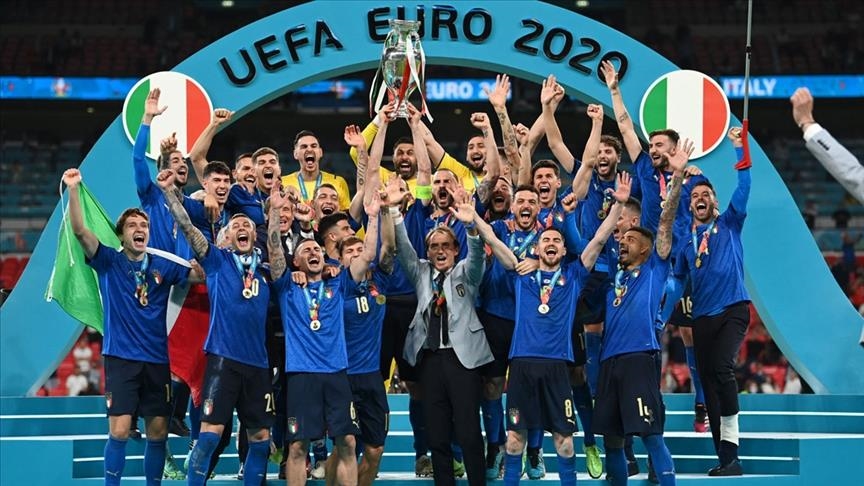
Nowhere is Team Azzurra more emotionally charged than in football.
Italy’s national football team is one of the most successful in history, with:
For Italians, these tournaments are cultural milestones. People remember where they were when Italy won the World Cup, missed a decisive penalty, or lifted a trophy against the odds.
During major tournaments, Italian cities transform:
These moments are not just about sport—they are about shared emotion and collective identity.

While football may dominate headlines, Team Azzurra represents Italy across dozens of sports.
Italian national teams in volleyball, basketball, fencing, swimming, cycling, and athletics proudly wear blue. In many of these disciplines, Italy consistently ranks among the world’s best.
Volleyball, in particular, has become a point of national pride, with Italian teams achieving international success and attracting devoted followings. Fencing and swimming have also produced Olympic champions who become household names—especially during the Olympic Games.
The unifying factor across all these sports is the jersey. Blue signals excellence, representation, and honor.
👉 Read more about Spots in Italy!

The Olympic Games amplify the meaning of Team Azzurra.
When Italian athletes march into Olympic stadiums wearing blue, they represent more than individual achievement. They carry history, expectation, and national pride. Olympic success often elevates athletes to iconic status in Italy, remembered long after their competitive careers end.
Italy’s deep Olympic tradition—from Rome 1960 to the upcoming Milan–Cortina Winter Games—has only strengthened the emotional bond between sport and national identity. The color blue ties those moments together across generations.
Team Azzurra matters because it creates a rare sense of unity in a deeply diverse country.
Sport offers Italians:
Victories are celebrated together. Losses are mourned collectively. These experiences create social glue—binding communities, families, and even strangers.
In a country where local identity is strong, Team Azzurra represents something bigger: belonging to Italy itself.
For visitors, witnessing Italy rally behind Team Azzurra offers an authentic cultural experience. Watching a match in a local bar or piazza reveals Italy at its most expressive—emotional, communal, and deeply connected.
These moments offer insight that no museum or guidebook can replicate. Sport becomes a gateway into understanding how Italians relate to one another and to their country.
At Nada’s Italy, our small group tours and custom trips allow cultural experiences like these to unfold naturally—woven into itineraries that reflect real Italian life, not just highlights. Whether through seasonal events, local traditions, or shared moments of celebration, thoughtful planning helps travelers experience Italy as Italians do.

There's a particular kind of magic that happens every week…
Read More
Italy is internationally celebrated for its art, architecture, food, and…
Read More

Christmas Food Traditions: From Our Tables to Yours Christmas in…
Read More

For Italians, Christmas is more than a holiday — it’s…
Read More

