
For Americans unfamiliar with train travel, navigating Italy’s rail system may seem daunting at first. However, once you understand the basics, it becomes an incredibly convenient way to get around.
Whether you’re traveling between major cities on high-speed trains or exploring local regions with budget-friendly options, learning how to travel by train in Italy will open the door to a seamless and memorable adventure. We also include the step-by-step guide on how to book train tickets in Italy in this article.

Driving in Italy can be daunting for travelers, with narrow streets, unpredictable traffic, and local driving customs. Trains eliminate the need for car rentals, allowing you to avoid the stress of navigation, parking and understanding road signs in Italian.
Italian train stations are conveniently located in the heart of cities, making it easy to step off the train and immediately immerse yourself in your destination. There’s no need for long commutes or shuttles—whether you’re visiting Florence, Venice, or Rome, you’ll arrive right where the action is.
One of the greatest joys of train travel is the opportunity to sit back and soak in the breathtaking scenery. From rolling vineyards and picturesque villages to dramatic coastal views, Italy’s diverse landscapes unfold before your eyes. It’s a chance to relax, enjoy the journey, and truly take in the beauty of the country.
Italy’s train network is extensive and well-organized, making it easy to travel between a lot of destinations. To make the most of your journey, it’s helpful to understand the two main types of trains:
The high-speed trains—Frecciarossa, Frecciargento, and Frecciabianca—are the pride of Italy’s rail system. These trains are designed for comfort, speed and convenience, reaching up to 300 km/h (186 mph).
They connect major cities like Rome, Florence, Milan and Venice, making them ideal for long-distance travel. High-speed trains feature modern amenities such as spacious seating, onboard Wi-Fi and food services, providing a luxurious way to see the country.
Regional trains are slower but more affordable, perfect for shorter distances or exploring local areas. They connect smaller towns and villages, offering a more relaxed pace of travel.
While they don’t have the same level of luxury as high-speed trains, they are an excellent option for budget-conscious travelers or those wanting to experience Italy’s countryside up close.

Buying train tickets online is one of the easiest and most convenient options. Websites like Trenitalia and Italo let you browse schedules, compare prices and book tickets in advance—all from the comfort of home.
👇Scroll down for a step-by-step guide (with screenshots) on how to buy train tickets on the Trenitalia website.
If you prefer more flexibility, you can also buy tickets at the station. Ticket machines are easy to use, often have English language options and allow you to pay with cash or card.
For even more convenience, download the Trenitalia or Italo apps to book tickets and check schedules directly from your smartphone.
When it comes to train tickets, it’s important to know the difference between reserved and open seating. If you’re traveling on high-speed trains like Frecciarossa or Italo, your ticket will include a reserved seat. This means you can relax, knowing you have a guaranteed spot on your train.
For regional trains, however, tickets often don’t include a specific seat, allowing you to choose any available spot once you board. This flexibility is great for short trips, but it’s wise to arrive early if you want to snag a good seat.
Stations like Roma Termini and Milano Centrale are large, busy and often packed with travelers. They are well-equipped with amenities such as ticket counters, self-service machines, restrooms, cafés and shops. Look for clear signage in both Italian and English to help you find platforms, exits and services. Arrive early to give yourself time to get familiar with the layout and avoid feeling rushed.
Italian train stations feature large electronic departure boards that display essential information. Look for your train’s departure time and number, which will be listed alongside its final destination. The platform number (binario in Italian) is typically posted shortly before departure, so keep an eye on the board and listen for announcements. Once you see your platform, head there promptly and confirm the train’s destination on the digital sign above the track.
If you’re traveling on a regional train, you’ll need to validate your ticket before boarding. Look for small green or yellow validation machines, usually located near the platforms. Insert your ticket into the validation machine to imprint it with the date and time of travel. This step ensures your ticket is valid and prevents fines during onboard inspections.
For high-speed trains with reserved seats, validation is not required, as your ticket is already assigned to a specific train and time.
👉 Click here to watch a video we made about taking trains in Italy!
Unlike airplanes, Italian trains are quite generous — there are no formal size or weight limits on luggage, and you won’t pay extra to bring bags on board. However, luggage space on trains are limited, so travel light if possible.
High-speed and long-distance trains (like Frecciarossa, Italo, etc.) usually offer overhead racks for smaller suitcases and backpacks, as well as designated luggage areas at the ends of each car for larger suitcases.
On regional trains, space can be tighter, so it’s easier to travel with mid-size bags you can lift onto racks or store beside your seat.
If you’re traveling with bulkier luggage, try to board early and secure a spot where your bags won’t block aisles or doors.
Travel light when possible. Trains and stations often involve stairs or narrow platforms, so heavy bags can become a hassle.
Keep valuables and essentials in a day pack or carry-on that fits under the seat or in a smaller overhead space.
Use luggage tags and identification labels — it helps if bags are stored out of sight or in shared spaces.
At major terminals like Roma Termini, Milano Centrale, Firenze SMN, and Bologna Centrale, you can sometimes hire porters to help with luggage for a small fee — a great option for travelers who’d rather not lift heavy suitcases themselves.
If you’re planning to explore a city between train connections, many stations offer luggage storage services where you can leave your bags temporarily (although lockers are less common than staffed offices).

Train stations can be busy and platforms are often announced only a few minutes before departure. Arriving 20–30 minutes early gives you time to check the departure boards, find your platform and settle in without rushing.
Whether you’ve purchased a paper ticket or an e-ticket on your phone, have it ready for inspection during your journey. Train staff will periodically check tickets, especially on high-speed trains, and being prepared helps avoid delays.
As with any travel, keeping an eye on your belongings is important, especially in crowded stations or on busy trains. Use luggage locks, keep your valuables close and avoid leaving bags unattended. For added security, consider using a money belt or an anti-theft bag for passports and other essentials.
👉 Check out our official Italy travel Preparation Resources and Planning Tools page.
Buying train tickets online is easy and convenient. Follow this step-by-step guide to purchase your Trenitalia ticket online in just a few minutes.
On the upper right hand corner, you can switch Language to English.
Search Routes: Enter from, to, date, time, and number of passengers. Indicate whether you want a one-way or a round-trip ticket.
Select Type Train: Choose your train ‘Solutions’:

Choose between different options: Class Standard / Premium / Business / Executive, and fare offers (e.g., “Best Price”).

Regional and Intercity usually do not offer this option.


Proceed by selecting the payment method you prefer (see Payment Options section) accepting the Carrier’s Conditions of Carriage and the Privacy Policy.


After making the payment, you will be provided with a message confirming the successful outcome of the operation with the summary data of the trip.
Write down the confirmation number that appears on the Summary page and in the e-mail (PNR code), useful for retrieving the confirmation e-mail with the ticket identification data if necessary.
You will also get a QR code/PNR code via email or in the app (“My Trips” section). Most tickets do not need to be printed; just show the QR code on your phone to the staff while traveling. Keep your email confirmation accessible.


Navigating Italy’s train system can feel overwhelming, especially for first-time visitors. That’s where Nada’s Italy steps in to make your journey seamless. As a ByDesign Custom Tour client, we can handle the logistics of booking the train tickets for you. From coordinating connections to ensuring a stress-free transition between destinations, everything is taken care of so you can focus on enjoying the journey.
With Nada’s Italy, traveling becomes an effortless and enriching part of your adventure. Let us take care of the details so you can simply relax and immerse yourself in the beauty of Italy and beyond. Explore our Small Group Tours and Custom Trip Services designed to meet your needs and exceed your expectations. Read our online reviews, sign up for our newsletter to stay updated on exclusive deals and travel tips, or contact us today to start planning your dream Italian getaway!
Are you planning your First Trip to Italy? Don’t worry, we have created a guide for first time travelers! We will help you navigate the options and choose an approach that best suits you in the article.
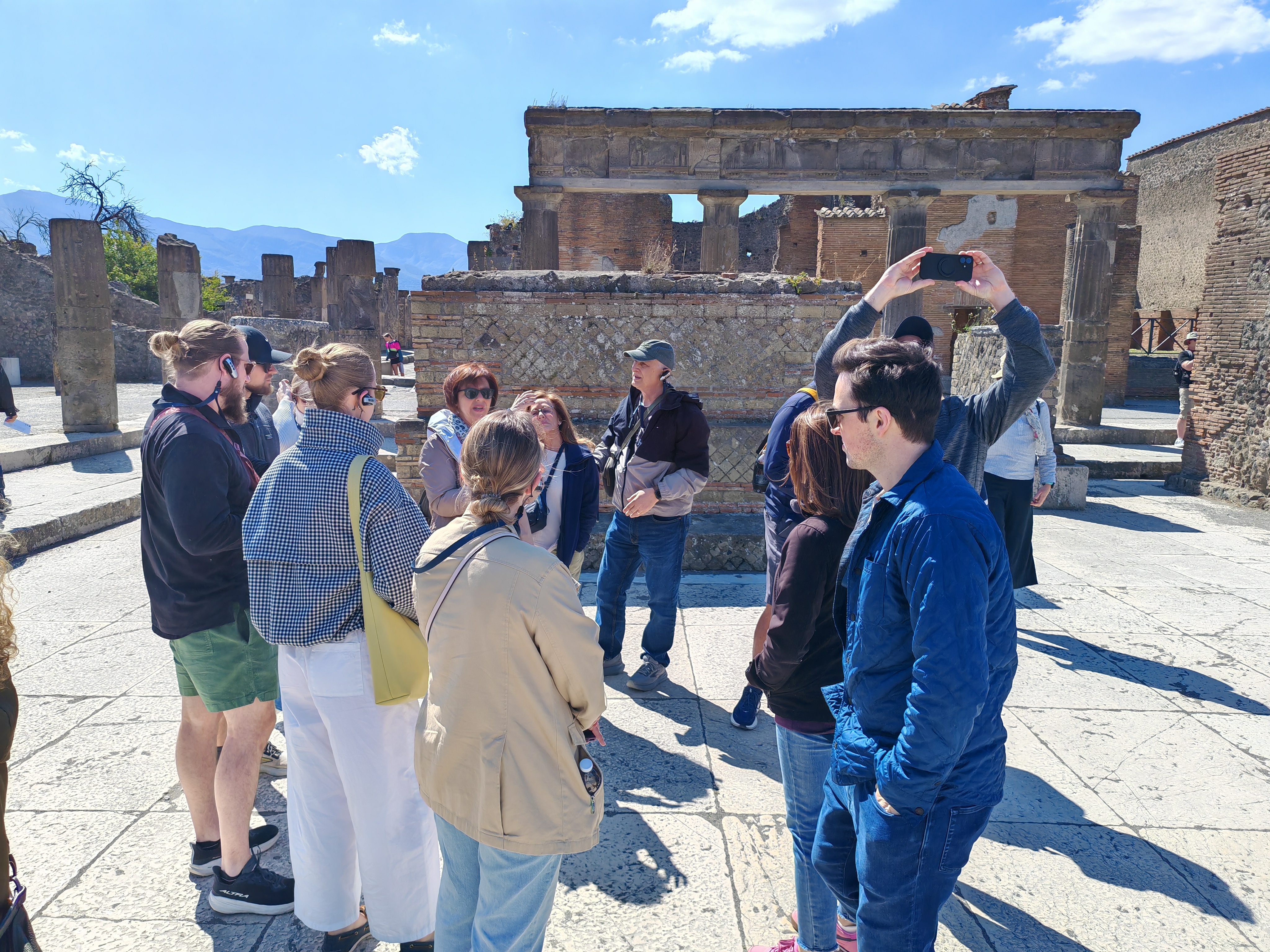
Italy is a year-round destination, but the experience changes considerably…
Read More

One of the most common questions we hear from travelers…
Read More

Planning your first trip to Italy is exciting — and…
Read More

Even the most carefully planned overseas trip can have…
Read More

